Links
3 stars
Notes: A Brief History of Intelligence (Bennett) | Scyy
18-minute read
This is a big picture book about how intelligence is implemented, synthesizing AI breakthroughs and preexisting research in neuroscience.
I found this especially pleasurable to read in between watching my 5 month old daughter, who is coming along as a mind. You can read my filtered summary of the book below, but you could also buy it and immerse yourself in the possible answers to one of the most interesting questions ever: “How is intelligence implemented?“. It was as pleasurable as spending a weekend with a very articulate and interesting friend.
Iran’s Ultimate Banned Book | The Dial
10-minute read
Almost everyone, however, urged me to read Sadeq Hedayat’s 1936 novel The Blind Owl, closely and more than once.
It was a surprising recommendation for a young, aspiring writer. The Blind Owl, written in Persian, was originally first self-published in Mumbai (then Bombay) with just 50 photocopied, stapled booklets made. The work is not a pinnacle of literary craftsmanship. It has an unusual, labyrinthine structure and a host of flat characters. Its narrative, which is centered the delirious monologue of an opium-addict pen-case painter, is fundamentally ambiguous, and it reads more like a long prose poem than a novel. But the writers I met likely didn’t consider these details, as the significance of this short novel far transcends questions of craft.
No other text has exercised such an incredible pull on the Iranian imagination. The Blind Owl has been subject to countless studies, interpretations, rewritings, and controversies. Numerous major literary scholars and critics have written about the book, and several novelists have composed entire works in response to it. Reza Baraheni, arguably the most prominent literary critic of the last century in Iran, genuflected before The Blind Owl. “It is not a book to reread,” he wrote, “but to rewrite, for its gravity is so extreme in its orbit all our critical tools are blunted.” Despite attempts by several Iranian governments to ban and bowdlerize his work over the last century, the ghost of Hedayat has maintained its grip on Iranian literature.
The Backcountry Rescue Squad at America’s Busiest National Park | New Yorker
23-minute read
In the Great Smoky Mountains, an auxiliary team of élite outdoorsmen answers the call when park-goers’ hikes, climbs, and rafting adventures go wrong.
[...]
America’s busiest national park isn’t Yosemite or Yellowstone; it’s the Great Smoky Mountains, which straddles the heavily forested border of North Carolina and Tennessee. Half the country can drive there in a day. The park measures 522,427 acres, nearly the size of Rhode Island.
[...]
Every year, the park logs more than twelve million visits, some of which go poorly. From the annals of misadventure and bad luck: A fifteen-year-old boy jumped between rocks at a scenic overlook and fell five hundred feet. Lightning struck near where a man lay reading in his tent; the charge “welded” him to the ground for at least ten seconds. A cyclist hit a deer and flew over the handlebars.
Original link | Archive.is link
Yes, It’s Fascism | The Atlantic
9-minute read
Until recently, I resisted using the F-word to describe President Trump. For one thing, there were too many elements of classical fascism that didn’t seem to fit. For another, the term has been overused to the point of meaninglessness, especially by left-leaning types who call you a fascist if you oppose abortion or affirmative action. For yet another, the term is hazily defined, even by its adherents. From the beginning, fascism has been an incoherent doctrine, and even today scholars can’t agree on its definition. Italy’s original version differed from Germany’s, which differed from Spain’s, which differed from Japan’s.
[...]
When the facts change, I change my mind. Recent events have brought Trump’s governing style into sharper focus. Fascist best describes it, and reluctance to use the term has now become perverse. That is not because of any one or two things he and his administration have done but because of the totality. Fascism is not a territory with clearly marked boundaries but a constellation of characteristics. When you view the stars together, the constellation plainly appears.
Original link | Archive.is link
2 stars
The pie and mash crisis: can the original fast food be saved? | The Guardian
6-minute read
“London’s original fast food, ‘pie and mash’ is making a surprise comeback in the British capital …” announced the Washington Post in a recent article. “This renewed demand for hearty ‘cockney cuisine’, so-called for its working-class East End roots, has been observed across the city.” The revival is said in part to be down to the TikTok generation’s fascination with these bygone establishments and their obscure customs. M Manze’s in Bermondsey – London’s oldest surviving pie and mash shop, founded in 1902 – has never been busier. At Goddards at Greenwich, the Post reported, there are queues down the street every weekend.
But behind this flurry of enthusiasm is a backstory of unrelenting decline. There are now just more than 30 pie and mash shops in London, where once there were hundreds.
On political power | Escaping Flatland
7-minute read
Before I first read Caro seven years ago, my understanding of how political power works was, as I recall it, very limited and flawed. I thought about power—to the extent I thought about it at all—in abstract and formal terms, along the lines of how it was explained in school. There were branches of government vested with different kinds of powers, and rules and laws governing how they can be used and by whom. If you got elected to a public office, you gained power; if you got a job as CEO, you gained another sort of power, and so on.
In Caro’s biographies, it is clear that the real political operators don’t think about it like this at all. To them, power is something you frack, something you force out of the stone by pumping fluid into the cracks. If you pay close attention, you will discover that there are drops of power everywhere—in the good feelings someone’s mother holds for you, in being able to get your college friend a job, in knowing embarrassing facts about your mentor, in having someone’s trust, and so on. To any normal person, these drops are so small that they barely register, and anyway, it feels wrong to treat someone’s mom as a reservoir to frack. But Caro’s subjects are willing to do anything to win, so they will, so to speak, pump fracking fluid into the ground. They will press it into every little crevice, forcing drops of power mixed with sand to the surface. And as it turns out, if you extract all the small things and pool them together, it can be a massive reserve of power, indeed.
It is not that the political “technicians” don’t care about the official sources of power—Lyndon B. Johnson is willing to do anything to become president, however appalling and degrading to himself or others. But a presidency, or a senate seat, or a seat in congress—that is like a big, well surveyed oil field. It will be intensely competed over, unlike the smaller crevices of power. And unless you have been able to frack enormous amounts, being elected to office is of limited use. Kennedy, for instance, struggled to push his programs and reforms through Congress, but the week after he was assassinated, the very next week, the reforms got unstuck and started moving, as Johnson was sworn in.
Microsoft and Software Survival | Stratechery
9-minute read
Microsoft Corp. shares got caught up in a selloff Thursday that wiped out $357 billion in value, second-largest for a single session in stock market history. The software giant’s stock closed down 10%, its biggest plunge since March 2020, following Microsoft’s earnings after the bell Wednesday, which showed record spending on artificial intelligence as growth at its key cloud unit slowed.
[...]
Given this match I do think it is only a matter of time before the vast majority of software is written by AI, even if the role of the software architect remains important for a bit longer.
That, then, raises the most obvious bear case for any software company: why pay for software when you can just ask AI to write your own application, perfectly suited to your needs? Is software going to be a total commodity and a non-viable business model in the future?
I’m skeptical, for a number of reasons. First, companies — particularly American ones — are very good at focusing on their core competency, and for most companies in the world, that isn’t software. There is a reason most companies pay other companies for software, and the most fundamental reason to do so won’t change with AI.
First Contact with America | novum
9-minute read
On three individuals who had wildly different impressions of the United States with world-changing consequences
[...]
It’s said that when future Russian President Boris Yeltsin visited an American grocery store in 1989, “the last vestige of Bolshevism collapsed inside him.” Although the detour lasted only 20 minutes, he was in such a state of shock that he was speechless on the plane ride back.
The United States was the first country Yeltsin ever visited outside the Soviet Union on his own. He had already been dined by wealthy Americans before, flown on their private jets, and socialized with the wealthy. His trip took him all over the country. But this impromptu visit to a grocery store off State Highway 3 in Webster, Texas surprised him at his core.
Yeltsin reportedly told aides after a long pause that, if Soviet citizens saw what he saw, “there would be a revolution.” In this store far away from any urban center, some 30,000 items were fully stocked and sold. Not even the Soviet Politburo had as many options available to them. Yeltsin was stunned: “Does this cornucopia exist every day for everyone? Incredible!”
His own experience as a regional party secretary was him struggling to procure food supplies for Sverdlovsk, Russia. He had previously organized poultry farms. All of it seemed insignificant having seen this small, well-stocked shop. The experience left him “sick with despair” for his own people whose economy was on the verge of collapse.
Upon returning back to the Soviet Union, he spoke to journalists about his experience. He spoke of the “madness of colors, boxes, packs, sausages, and cheeses.” He relayed to his aides that Americans spent just a tenth on food, with more variety, whereas Soviet citizens spent over half. Thereafter, he decided that his mission was to bring this American dream to the Russian people.
“The fate of civilization is at stake” | Internal Tech Emails
5-minute read
Sam Altman: “well, you’re my hero and that’s what it feels like when you attack openai. totally get we have some screwed some stuff up, but we have worked incredibly hard to do the right thing, and i think we have ensured that neither google nor anyone else is on a path to have unilateral control over AGI, which i believe we both think is critical. i am tremendously thankful for everything you’ve done to help—i dont think openai would have happened without you—and it really fucking hurts when you publicly attack openai.”
Elon Musk: “I hear you and it is certainly not my intention to be hurtful, for which I apologize, but the fate of civilization is at stake.”
How did medieval French handwriting become “the Nazi font?” | weird medieval guys
8-minute read
In the 5th century AD, a collection of Germanic tribes called the Goths sacked Rome. By the 10th century, their language, alphabet, and identity were extinct. Yet, in 1941, Adolf Hitler banned the Nazi party from using what he called “Gothic letters”. Hitler was referring to a style of writing that had developed in medieval France and England and had nothing to do with the historic Goths, yet somehow since the Middle Ages had become synonymous with Gothic people, who themselves had become synonymous with the modern people known as Germans.
Today, sticklers will tell you that the proper term for these typefaces is blackletter, but the Gothic label remains prevalent. And, despite Hitler’s best efforts, they remain associated with right-wing and white nationalist movements. So, how did this historical tangle come to be?
This is the story of two fonts battling for dominance. One is the “Gothic” family, now largely fallen out of usage. The other is the “Roman” font, which provided the basis for most of the typefaces we use today.
A Role Model for How to Die | New York Times [gift article]
7-minute read
On the day that Brian Cahill’s life zagged, he spoke by phone with his brother in Cincinnati, worked out with his personal trainer and shopped for groceries. He assembled a new bed in his apartment and hauled the old one to the basement. He was ready for an afternoon nap.
He was 58 years old, in excellent physical shape, able to leg press 500 pounds. He had a rent-stabilized apartment, a good job as a media consultant and an exuberant interest in sex.
“I was feeling very good about my life,” he recalled.
Original link | Archive.is link
What a liberal immigration enforcement policy might look like | Noahpinion
7-minute read
ICE’s brutality is souring much of the electorate on the Trump administration. The Democrats look increasingly likely to win at least the House of Representatives in the midterms — so likely that Trump is now panicking and starting his election denial routine early. But Trump shows signs of realizing that he overreached, demoting the head of the Border Patrol and making some other halting moves toward de-escalation.
This is progress (at least if you dislike unaccountable secret police, race wars, warrantless searches, summary executions of protesters, and so on…which I do). But it’s possible that Democrats — and especially progressives — will take the wrong message from their first small victories in the battle against autocracy.
[...]
But the other danger is that Dems will take a midterm victory as a sign that they don’t need to recalibrate their position on the immigration issue. In a post two weeks ago, I pointed out that although they hate Trump’s heavy-handed tactics, Americans still don’t support the permissive immigration policies of the Biden years.
Recent polls confirm this.
[...]
Thus, Dems should be thinking about what a liberal immigration policy would look like. Here are some of my own suggestions.
Why Private Equity Is Suddenly Awash With Zombie Firms | Forbes
6-minute read
Welcome to private equity’s new era: the age of the PE zombie. Similar stories are playing out throughout North America and Europe, as an industry that was once a golden ticket, minting dozens of billionaires, is going through difficult times. Consulting firm Bain & Co. reported last year that more than 18,000 private capital funds were in the market, collectively seeking to raise $3.3 trillion, but it projected the total amount raised would be only a third of that, with more being allocated to credit and infrastructure funds rather than traditional buyout strategies.
1 star
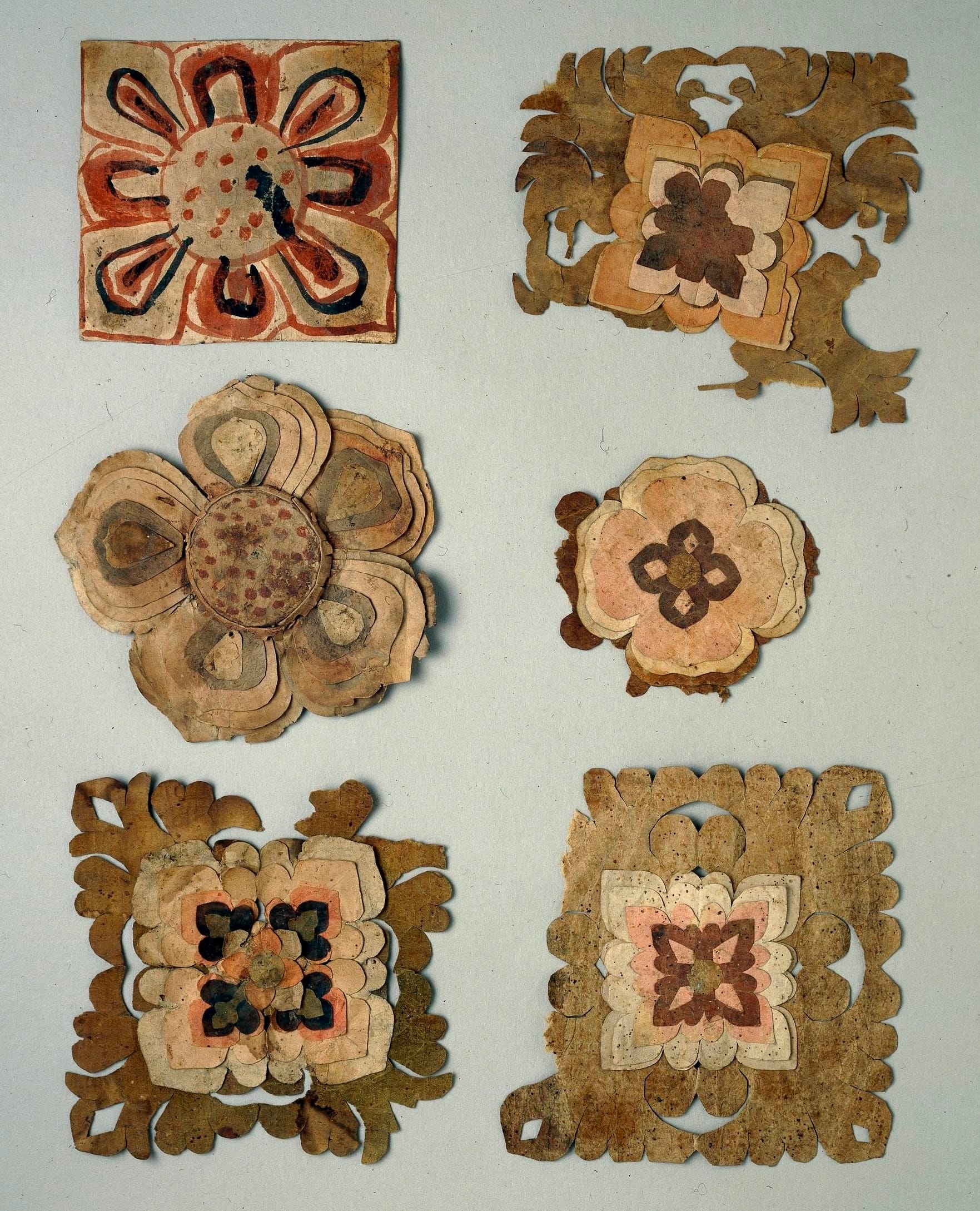
These 1,000-Year-Old Paper Flowers, Sealed in a Cave, Are a Marvel of Preservation | Colossal
1-minute read
Among the Mogao Caves’ nearly 500 surviving chambers and temples, which are filled with statuary and wall paintings spanning a millennia of Buddhist art, one particular space known as Cave 17 revealed some extraordinary objects. It was excavated in the early 1900s by an archaeologist named Marc Aurel Stein.
Some 50,000 documents, textiles, and other objects emerged from the cavern, which had been sealed up some time during the 11th century. Among these were a series of cut and folded paper flowers, several of which are part of The Stein Textile Collection, stored at the British Museum and the V&A in London.
Contra Ajeya Cotra on Women Asking Men Out | a newsletter
8-minute read
As a woke feminist lib myself, I don’t see the algorithm here as fundamentally “male”-optimal and “female”-pessimal: it is asker-optimal and askee-pessimal. The problem rewards agency and punishes passivity, to an astonishingly strong degree.
So if the Gale-Shapley algorithm is asker-optimal, why don’t women ask men out? Are women just stupid? Lazy? Cowardly? Conformist? Unagentic? Or is the real world less asker-optimal for women?
How is the actual marriage market different from the stable matching problem?
[...]
I basically disagree that asking men out works, but I agree that more asking-for-things-in-general is great. My feminism-inspired forays at asking men out were bad ideas, but I had figured out that I shouldn’t do that by my early 20’s. I figured that even though it didn’t work for me, and wouldn’t work for most women, maybe it was the kind of advice that would mostly be seen and followed by women that it would work for. But when I read Cyn’s great piece about asking men out, and stopping asking men out, I was like, okay, I am not literally the only woman in the world who has tried this strategy and found it wanting, maybe this is worth talking about.
Chinese fossils show marine animals thriving half a billion years ago | Reuters
2-minute read
Scientists have unearthed in southern China fossils of a multitude of marine creatures dating to more than a half billion years ago, showing a deep-water ecosystem thriving in the aftermath of the first mass extinction of the animal world.
Why snakes can go months between meals: A genetic explanation | Phys.org
2-minute read
Snakes may well be one of nature’s greatest predators, capable of eating whole deer or even crocodiles, but just as impressive is that they can go months, or even a whole year, without a single meal.
[...]
In all the snakes they studied, which included pythons, boas, and vipers, genes for ghrelin and an enzyme called MBOAT4 (which activates ghrelin) were independently lost or heavily eroded.